03 · Social product · 2025
Threadable Books
As lead designer, I solved the cold-start problem for a social reading app, making it feel alive before a reader has a single follower, and grew active users 60%.
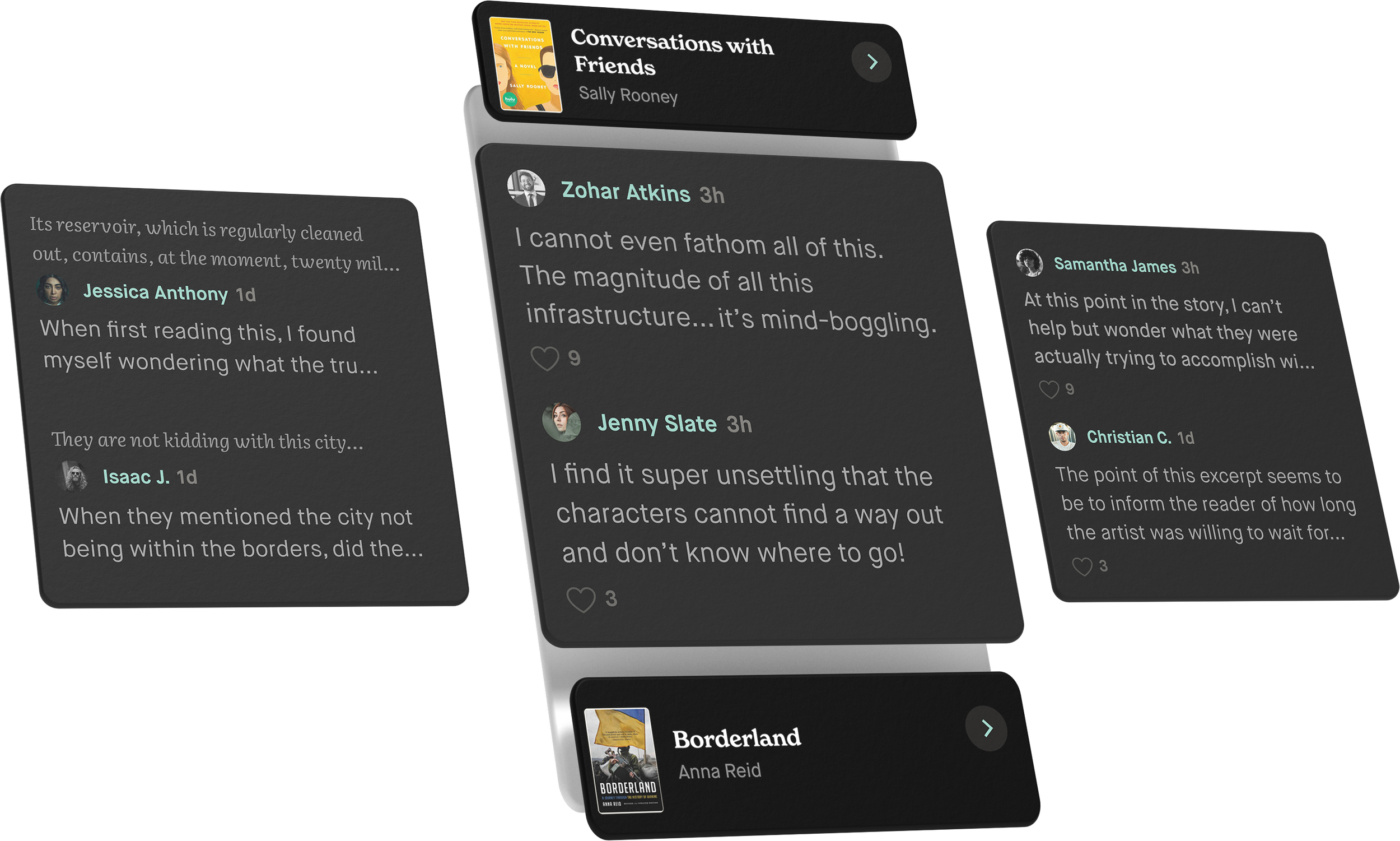
More than a reading tracker.
Threadable is a social reading app: people read books together, annotate in the margins, and talk about what they are reading. The hard part of any social product is the beginning, when your network is empty and the room feels dead.
As Lead Product Designer I owned the experience end to end across iOS and web: research, UX, UI, brand, prototyping, and the design system. I focused the work on the cold-start problem, making a brand-new reader feel they had arrived somewhere alive and worth talking in, before they had a single connection.
The redesign grew active users, deepened conversation, and meaningfully improved retention, especially for the readers who started with no network at all.
+60%Active users
+40%Engagement
+25%Retention
2xComment engagement
+67%Rating completion
+34%Retention, low-connection users
A great idea with an empty room.
Reading is social, but most reading apps treat it as solitary tracking: pages, streaks, star ratings. Threadable wanted to be the place readers actually talk. The product had a passionate early base and a strong concept, but growth stalled at the front door.
New readers arrived to a feed that felt quiet because their network had not formed yet. The very people the product needed to convert, newcomers, got the worst first impression. That is the cold-start problem, and it was the difference between a niche tool and a place people return to.
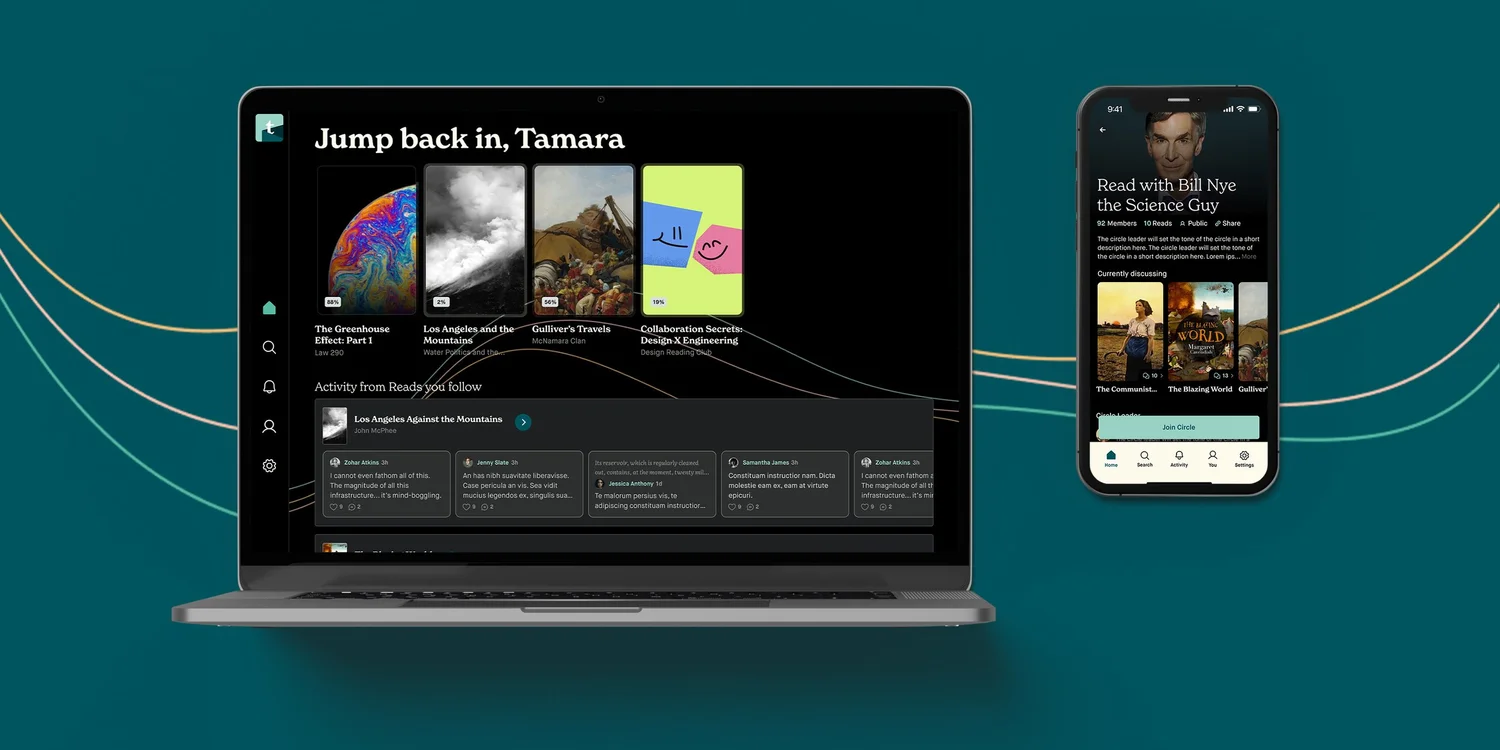
Four things pushing newcomers away.
Onboarding was front-loaded. People had to do a lot of setup before they saw anything worth staying for.
The cold-start problem. With no followers, the feed was empty, so the social product felt antisocial on day one.
Inconsistent brand. The look drifted across surfaces, which undercut trust in a product asking for vulnerability.
People wanted conversation, not scores. The experience leaned on ratings and stats when readers came for discussion.
The challenge
Make a new reader feel they have arrived somewhere alive and worth talking in, before they have a single follower.
Three rules I designed against.
01
Alive on arrival
The room should feel populated from the first session, using the community's real activity as ambient social proof.
02
Conversation over scores
Reward and surface discussion, not ratings and streaks. Talking is the product.
03
Belonging before network
Design for the low-connection majority, not just the power users who already have a following.
Where the product was losing people.
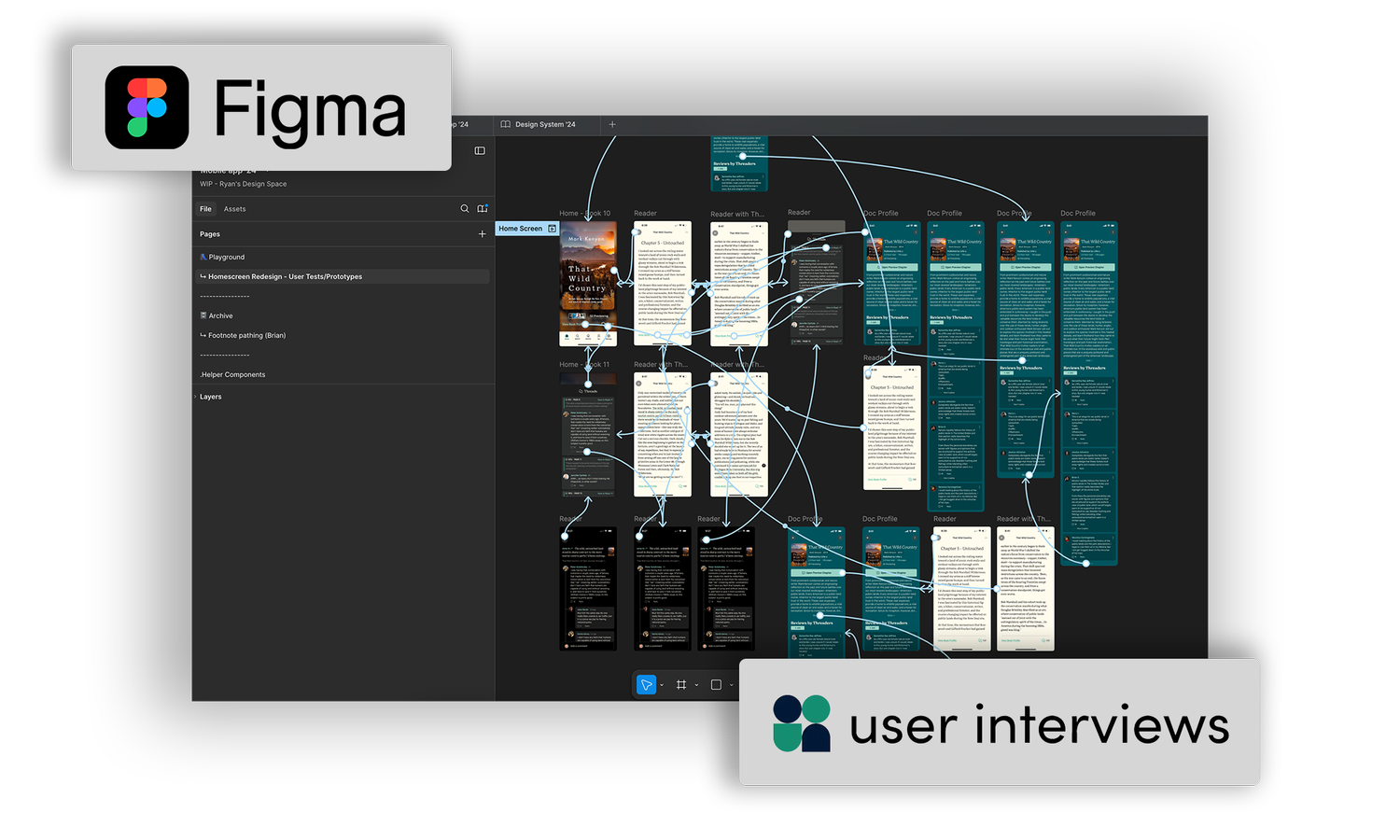
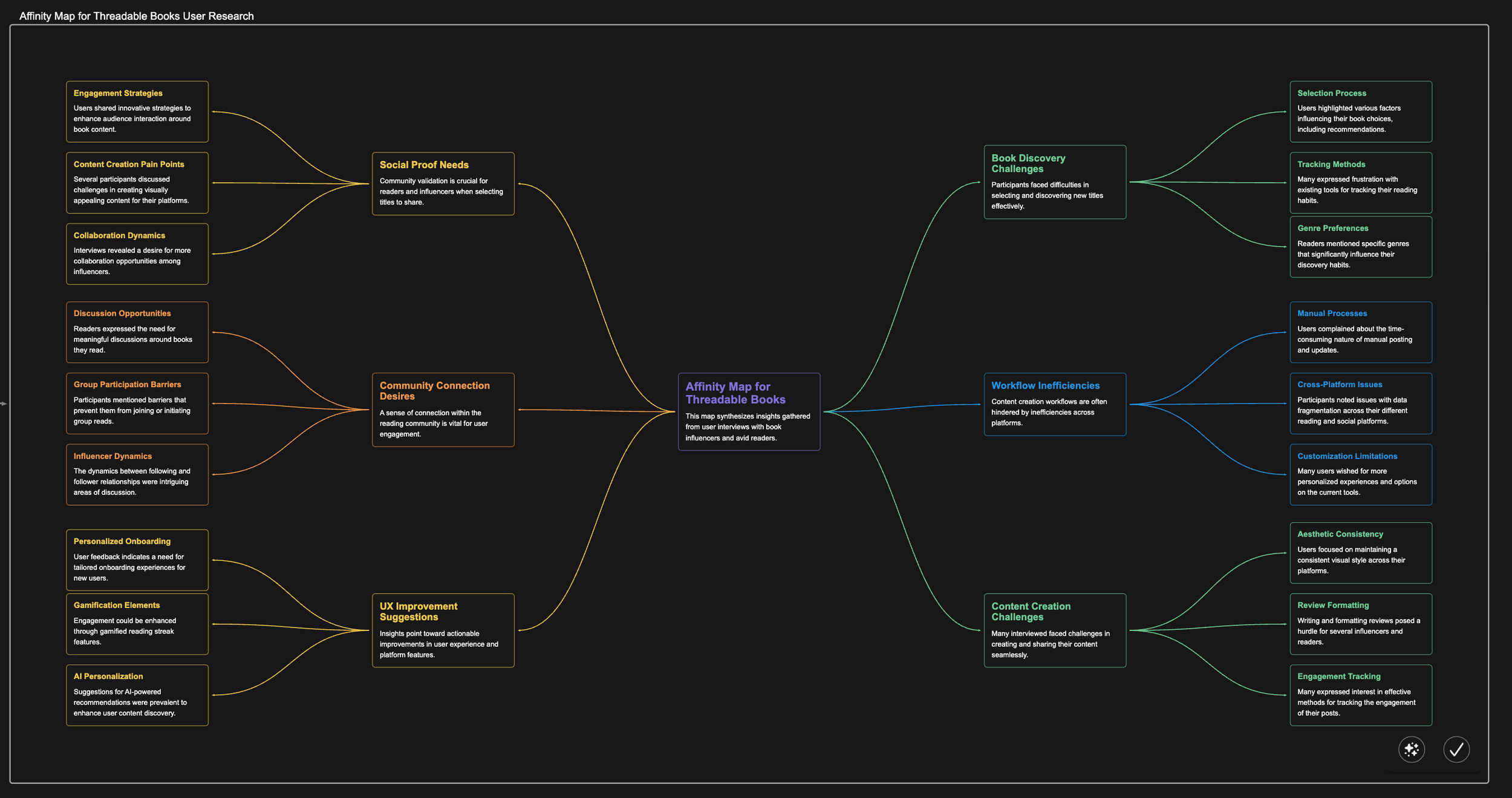
I started in the data and with readers directly: funnel analysis to find where newcomers dropped, interviews to understand why they came and what made them stay, and a review of the existing experience against the moments that mattered. The picture was consistent. People loved the idea and bounced off the start.
I synthesized the findings into three personas that gave the team a shared language for who we were designing for.
A
The Curator
Builds shelves and reading lists. Wants their taste to be seen and to discover what is worth reading next.
B
The Critic
Reads to react. Wants to annotate, argue, and be drawn into good conversation about a book.
C
The Community Builder
Reads to belong. Wants a room of people, and is the most hurt by an empty feed on day one.
One question to design against.
All three personas pointed at the same gap, so I reframed the whole project into a single question the team could hold every idea up to: how do we make a new reader feel the conversation is already happening, and that there is room for them in it?
That reframe changed what we measured. Instead of optimizing reading stats, we optimized for conversation: comments, annotations, replies. To deliver against it consistently across iOS and web, I built a design system, tokens, components, and documented usage, so the rebuilt experience stayed coherent and handoff stayed fast.

Solving the empty room.
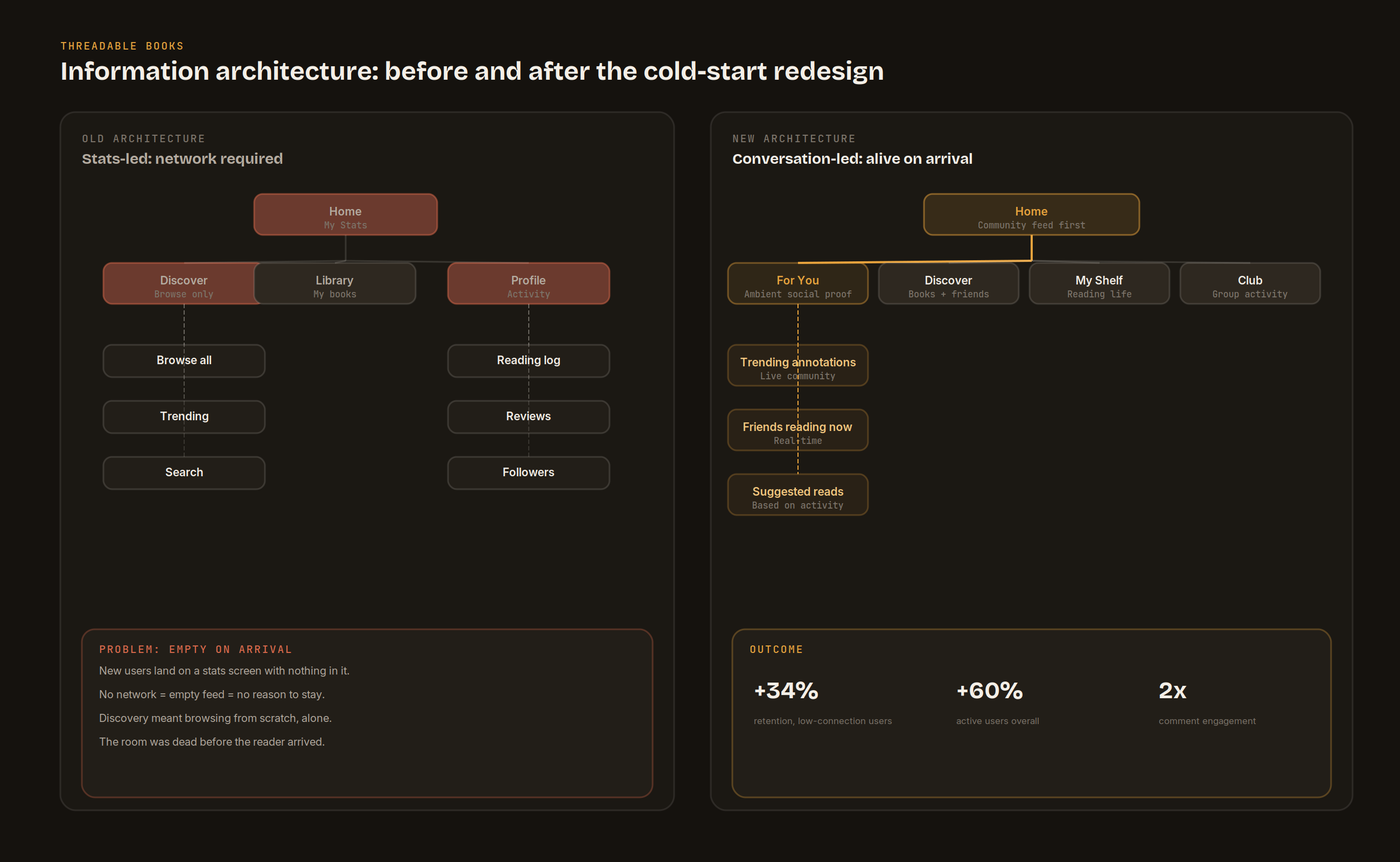
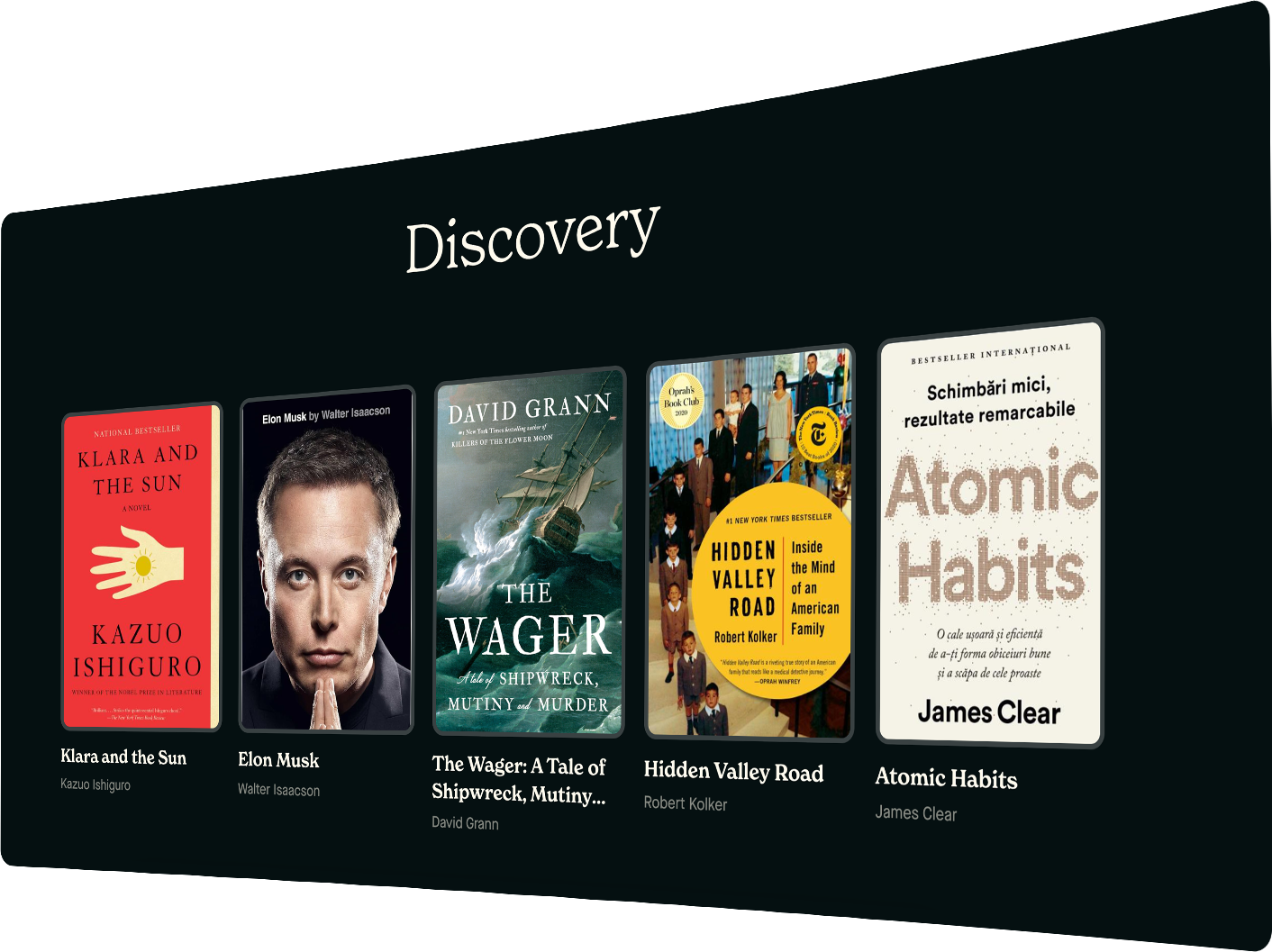
The core move was to stop showing newcomers their own empty network and start showing them the community's living activity. I redesigned the home feed around conversation and prototyped two directions for what a new reader should see first.
Option A · Stats-led
Your reading, by the numbers
- Clear personal progress
- Simple to build
- Empty and lonely with no history or network
- Rewards tracking, not the talking people came for
Option B · Conversation-led · chosen
The room, already talking
- Surfaces real community activity from the first session
- Models the behavior we want: annotate, reply, discuss
- Gives newcomers an obvious way in
- Needs careful curation so it feels relevant, not random
I rebuilt onboarding to get people to value faster, redesigned the feeds around discussion, and worked on algorithmic curation that surfaces community signal early, what I framed as ambient social proof. New readers see annotations worth replying to and conversations worth joining before they follow anyone. I validated the direction with clickable prototypes in live testing and iterated on what tested poorly.
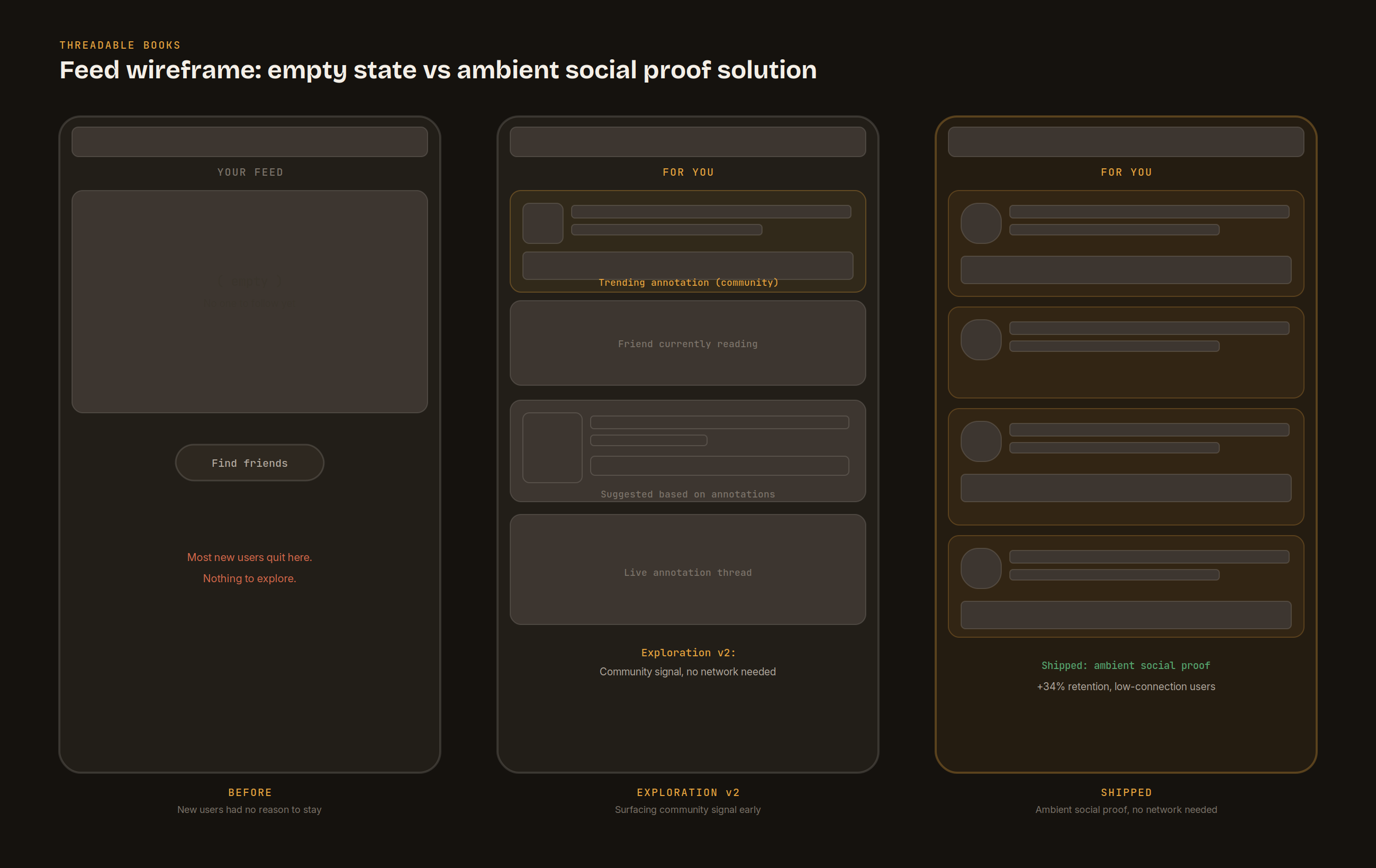
Key discovery
Ambient social proof mattered most to the people who needed it most. Surfacing the community's activity early lifted retention among low-connection readers by 34%, the cohort that had been bouncing.
What shipped, and what it moved.
The redesigned home replaced an empty, stats-first screen with a living, conversation-first one. The before and after tell the story: from a quiet dashboard to a room that is already talking.
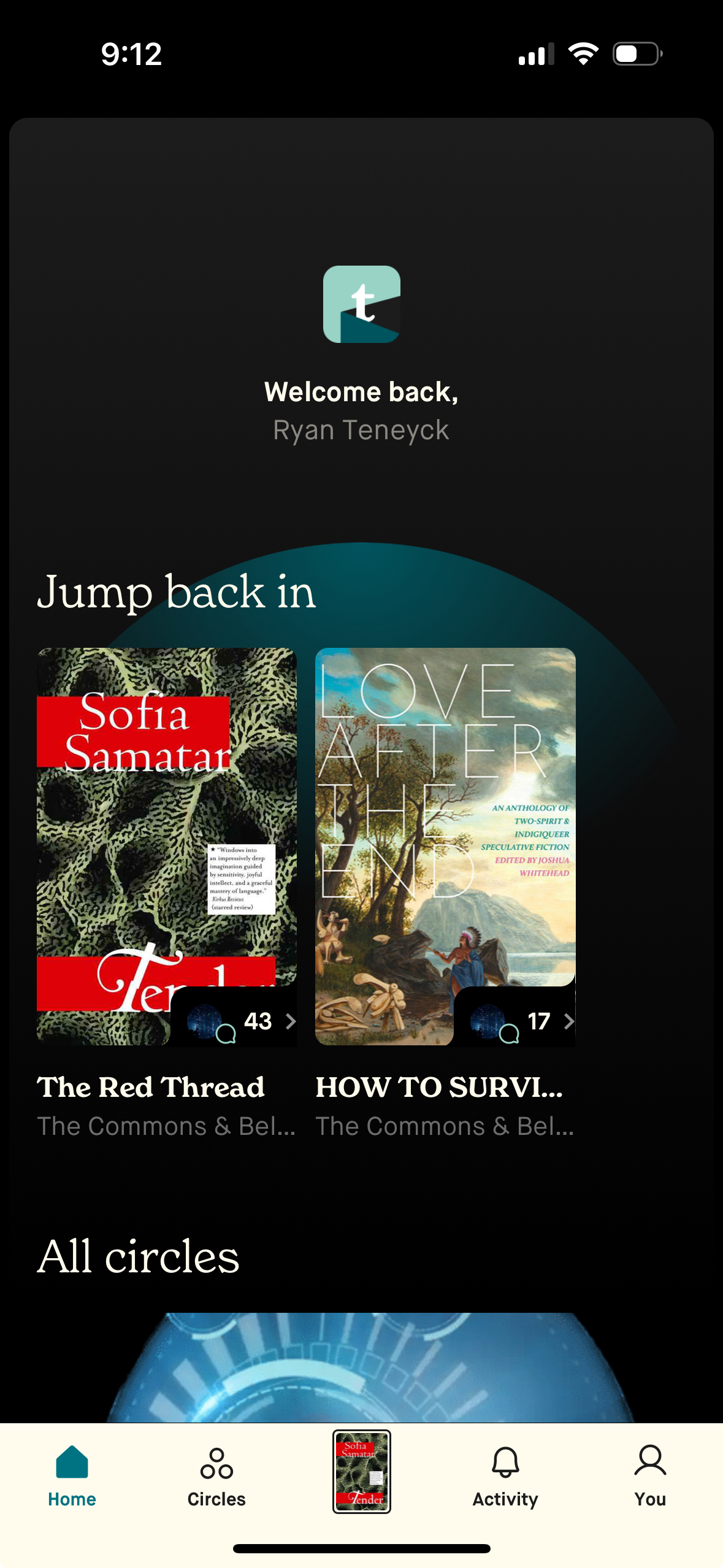
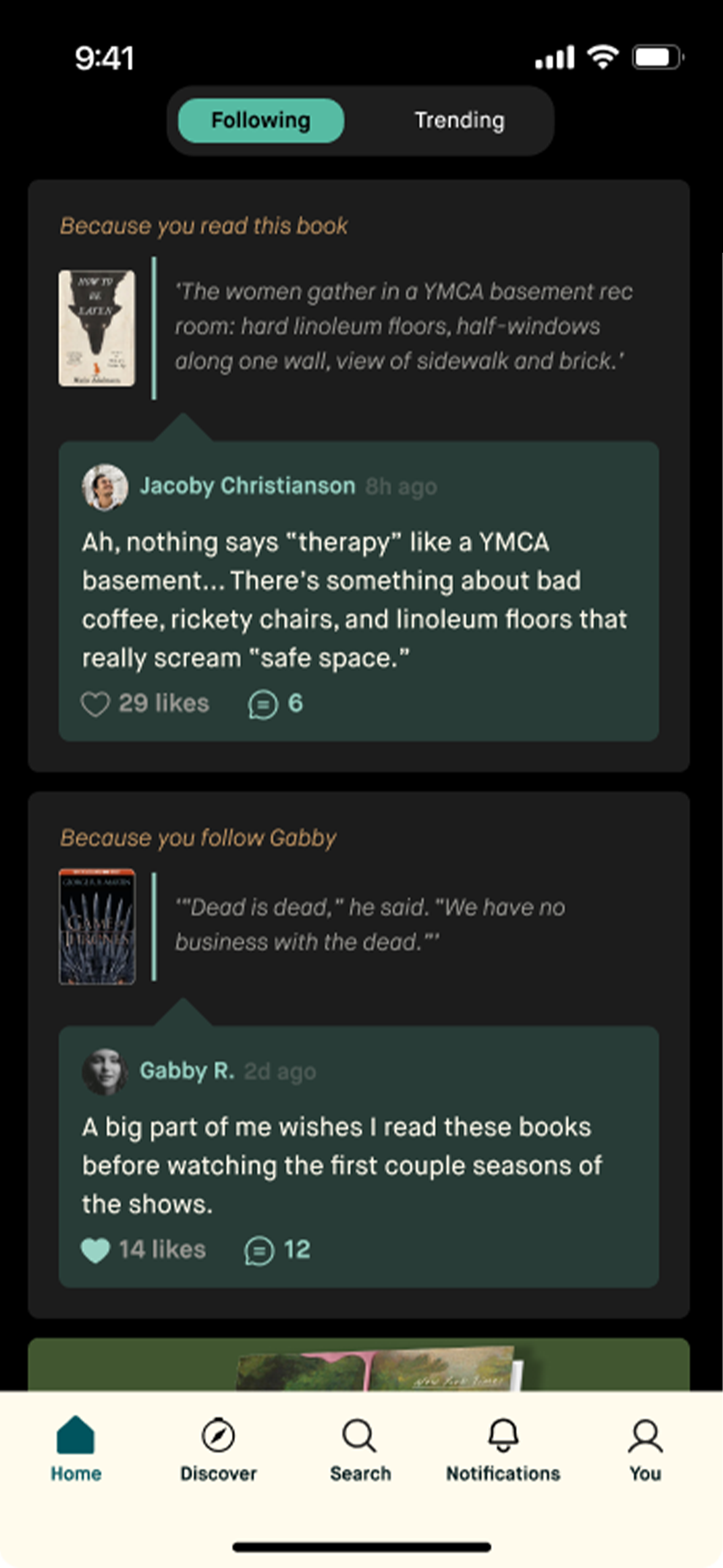
Conversation became the center of gravity. Comment engagement doubled, rating completion rose 67% as it shifted from a chore to a natural part of discussion, and the overall product grew on every core measure.
A social product that finally felt social.
Reframing the product around conversation and solving the cold start moved every metric that mattered: active users up 60%, engagement up 40%, retention up 25%, and comment engagement doubled. The clearest signal was the 34% retention lift among low-connection readers, proof that the empty room, not the idea, had been the problem.
+60%Active users
2xComment engagement
+34%Retention, low-connection users
+67%Rating completion
What I would carry forward.
01
Design for the empty state
A social product is judged on the day you have no network. Win that moment and the rest compounds.
02
Measure the real behavior
Switching the goal metric from reading stats to conversation changed every downstream decision for the better.
03
Borrow the crowd
Ambient social proof let every newcomer feel a community before they built one. Relevance made it work.