02 · Enterprise B2B SaaS · 2025
HQ Services
Senior UX Strategist brought in to turn a tangle of user problems into clear, prioritized, defensible design direction for complex B2B SaaS.
RoleSenior UX Strategist
ScopeResearch, Strategy, UX Audit
TypeB2B SaaS · Remote
Year2025
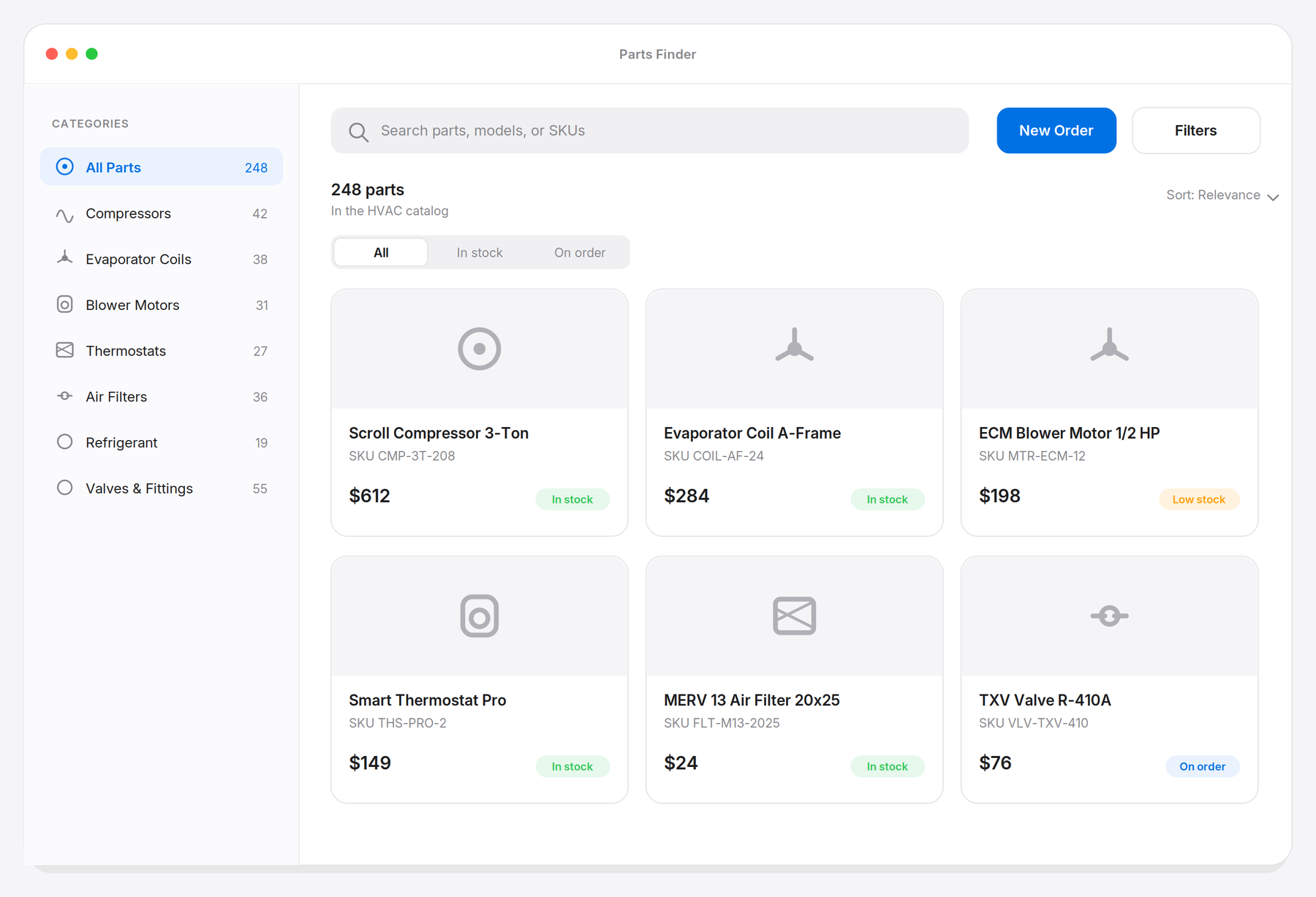
A representative parts-search interface in the Apple design system used on this engagement, built to show the work since the client product is under NDA.
Context
Hired to bring order to a complex product.
HQ Services brought me in as a Senior UX Strategist to work inside a technically complex B2B SaaS environment, the kind of product where the hard part is not the pixels, it is untangling what users actually need from what the system currently does. The specifics are covered by NDA, so this page is about how I worked and the value I brought, not the confidential product itself.
My mandate was research and strategy: understand the people using the platform deeply, find where the experience was costing the business, and turn that into design direction the team could act on and prioritize with confidence.
MixedMethod research program
Data‑ledPersonas driving strategy
Cross‑fnAlignment to ship it
01 · Research
Mixed-method research, not a single lens.
I ran a mixed-method program rather than leaning on any one source. In-depth user interviews surfaced motivation and frustration, usability testing showed where real tasks broke down, and behavioral analytics told me how widespread each problem actually was. Triangulating across all three kept the findings honest and kept opinion out of the room.
From that synthesis I defined data-driven personas: not demographic sketches, but decision-making profiles grounded in evidence, built specifically to inform product strategy and feature roadmap prioritization. They gave the team a shared, defensible answer to the question that derails most roadmaps, who are we actually building for.
The work was less about adding screens and more about deciding what deserved to exist, then making that case with evidence the whole team could stand behind.
02 · Audit
UX audits that named the friction and the fix.
In parallel I conducted UX audits and heuristic evaluations across the platform's module workflows, with a sharp focus on the conversion and onboarding flows where friction quietly costs the most. Each finding came with a clear severity, the behavior it was blocking, and a research-backed direction to resolve it, so the output was a prioritized plan, not a list of complaints.
The point of an audit is leverage. By tying each friction point back to a metric the business already cared about, the design recommendations stopped being subjective taste and became obvious investments.
03 · Alignment
Translating insight into action across teams.
Research only matters if it ships. I facilitated cross-functional alignment sessions that translated user insight into concrete design recommendations, while managing the competing priorities that always exist between product and engineering. My job in those rooms was to keep the user's reality central without ignoring technical and business constraints, and to leave each session with decisions, not just discussion.
It was a short, focused engagement, and the value was exactly that focus: turn ambiguity into structured direction, ground every call in evidence, and get a complex product team pointed the same way.